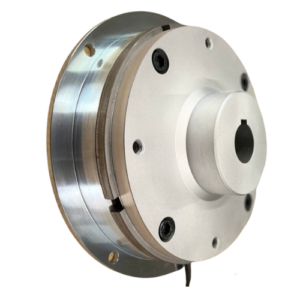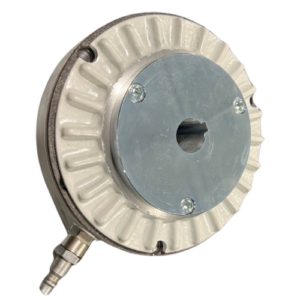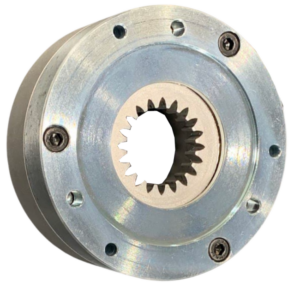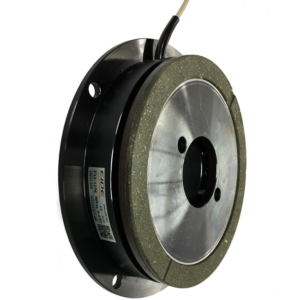
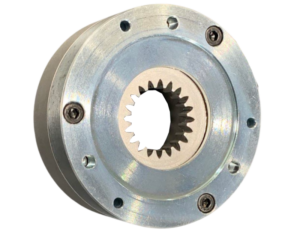
Description
How does a pneumatic brake work?
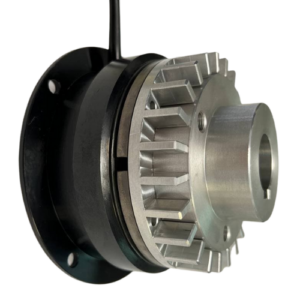
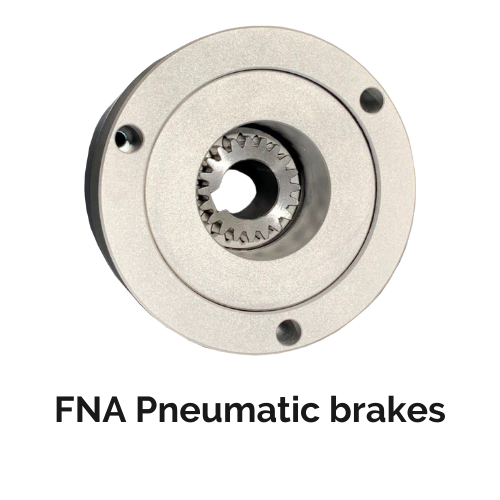
In a positive pneumatic brake, the actuating force that generates braking torque comes from compressed air. Applying air to the actuator chamber pushes a piston that compresses the friction disc against the rotor, creating the braking force through friction. The torque generated is proportional to the air pressure applied, which means the braking force can be modulated by adjusting the supply pressure within the operating range.
When the air supply is cut or vented, return springs push the friction elements apart, releasing the brake and allowing free shaft rotation. The FNA is therefore engaged by air and released by spring, which is the defining characteristic of a positive pneumatic brake.
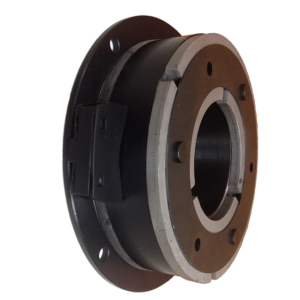
FNA pneumatic brake: key technical features
- Positive action: air-applied, spring-released
- Braking torque range: 12 to 220 Nm
- Fast response time for high cycle frequency applications
- Efficient heat dissipation for sustained duty cycles
- Accurate and consistent stopping performance
- Low residual torque when released
- Self-adjusting to wear limit for consistent torque over service life
- For horizontal axis applications
- Low maintenance
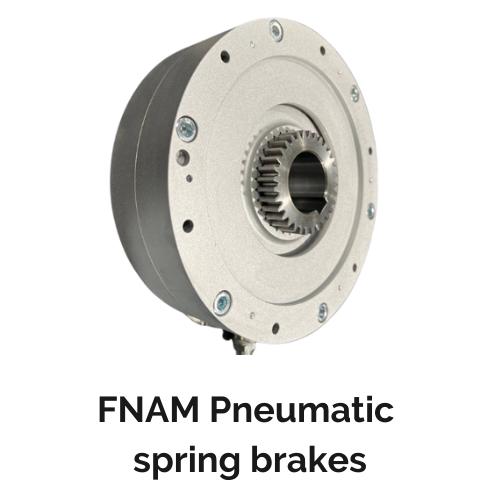
For applications requiring spring-applied fail-safe braking where loss of air pressure must engage the brake, see the FNAM pneumatic spring brake.