

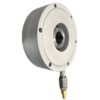
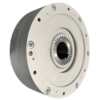
Description
How does a pneumatic brake work?
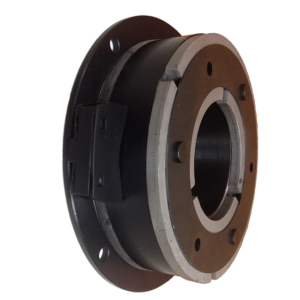
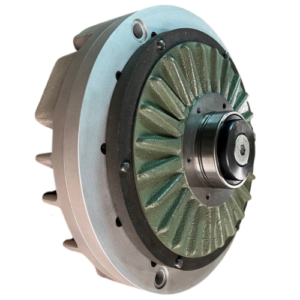
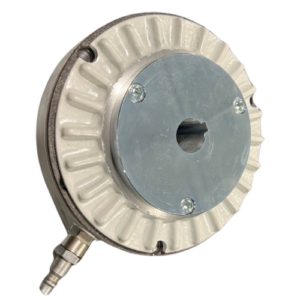
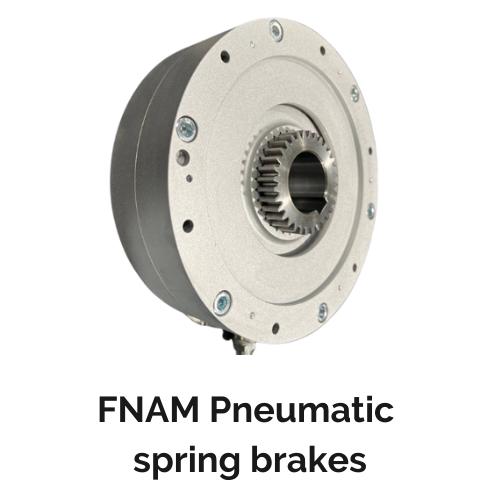
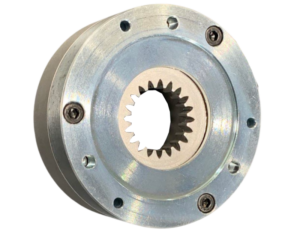
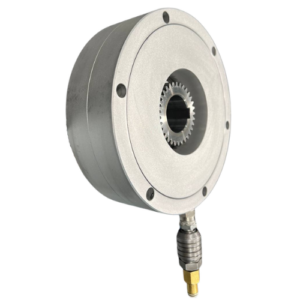
The FNAM operates on the spring-applied, air-released principle. Integrated compression springs hold the friction disc against the braking surface, generating the braking torque at rest. When compressed air is supplied to the actuator chamber, the air pressure overcomes the spring force, retracts the friction disc, and releases the brake, allowing free rotation of the shaft.
When air pressure drops, whether by a controlled signal or a supply failure, the springs re-engage the friction disc and the brake holds the shaft. This behaviour is the opposite of a positive-action electromagnetic brake, where current is required to brake rather than to release.
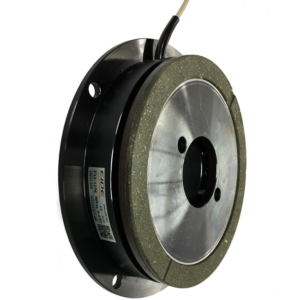
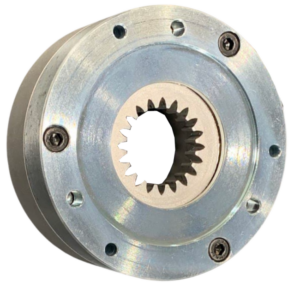
FNAM pneumatic brake: key technical features
- Spring-applied, pneumatically released (fail-safe negative braking)
- Braking torque range: 12 to 220 Nm
- Fast response time suitable for high cycle frequency applications
- Efficient heat dissipation for sustained duty cycles
- Accurate positioning and consistent stopping performance
- Self-adjusting to wear limit for consistent torque over service life
- Low-maintenance design
- For horizontal axis applications
Pneumatic brake vs electromagnetic brake: when to choose the FNAM
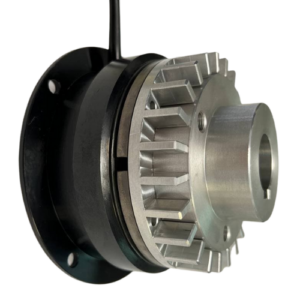
Both the FNAM pneumatic brake and the FDB electromagnetic brake are spring-applied fail-safe brakes. The main difference is the release actuator:
- FNAM (pneumatic release): requires a compressed air supply. Suited to machines that already have a pneumatic circuit, or applications where electrical power near the brake is not desirable. Higher force output per unit size compared to electromagnetic release at equivalent spring preload.
- FDB (electromagnetic release): requires a DC power supply. Suited to machines without a pneumatic circuit, or where electrical control integration is simpler. More common in standard motor-mounted configurations.
If your machine has both pneumatic and electrical infrastructure, the FNAM typically offers higher braking torque in a more compact envelope.