Description
How does a torque limiter work?
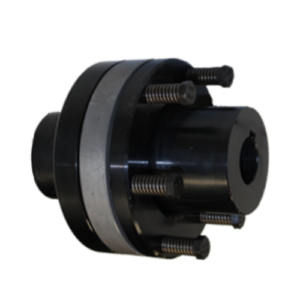
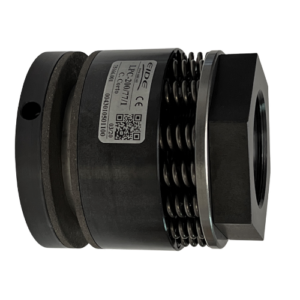
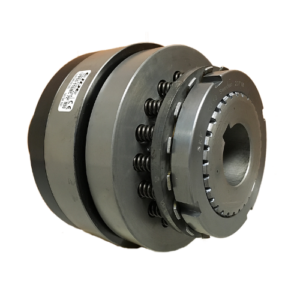
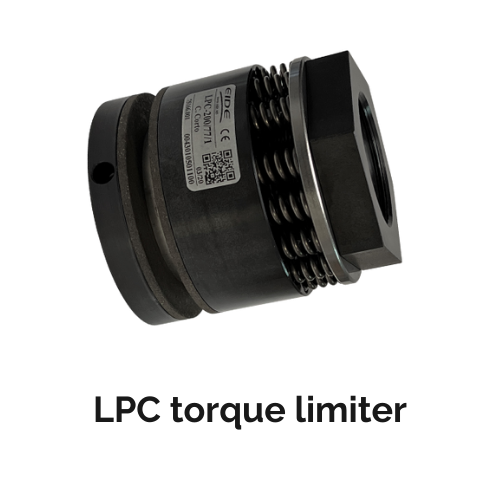
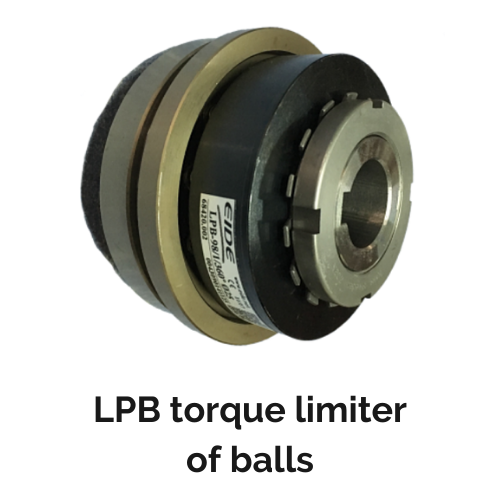
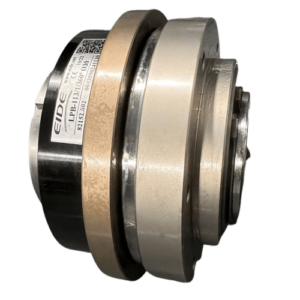
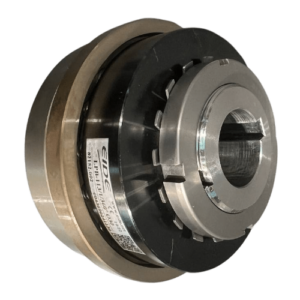
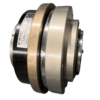
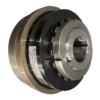
The LPB uses a ball-detent mechanism as its torque-sensing element. A set of hardened balls sits in conical seats machined into the drive hub. A spring pack holds the balls in position with a preset force that determines the trip torque. Under normal operating conditions, the balls remain seated, and the input and output flanges rotate together as a rigid coupling.
When the applied torque exceeds the set value, the force on the balls overcomes the spring preload, and the balls ride out of their seats. This disconnects the input from the output, and the flanges slip relative to each other. The slipping continues until the overload is cleared, at which point the balls drop back into the seats and the coupling re-engages. Re-engagement occurs at a defined angular position, which means the machine returns to the same mechanical reference after every trip.
The trip torque is adjusted by changing the spring preload. A sensor can be fitted to detect the slip event and send an electrical signal to the machine control system for logging or emergency stop triggering.
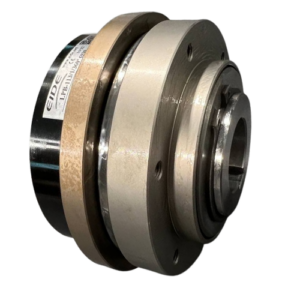
LPB torque limiter: key technical features
- Ball-detent mechanism for accurate, repeatable torque limiting
- Automatic re-engagement after overload clearance
- Adjustable trip torque via spring preload
- Re-engagement at fixed angular position (360 degrees standard, other angles on request)
- Optional sensor for electrical trip signal output
- Torque range: 10 to 600 Nm
- Bore diameter: 10 to 60 mm
- Compact axial design for integration into existing shaft lines
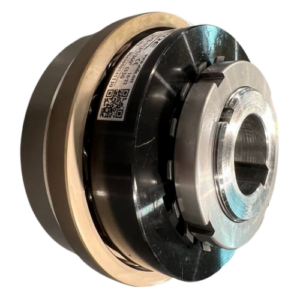
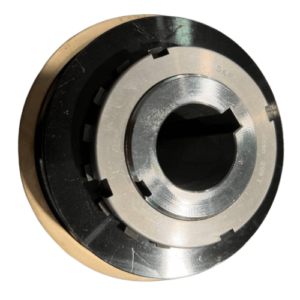
- Available with keyway, spline, or shrink disc bore configurations
Selecting the right LPB torque limiter
The key parameters for LPB selection are:
- Required trip torque (Nm): the maximum torque the drive should transmit before the limiter trips. This is typically 1.5 to 2 times the nominal operating torque.
- Shaft diameter (mm): determines the minimum bore size. The LPB range covers 10 to 160 mm.
- Operating speed (RPM): affects heat generation during slip. High-speed applications with frequent trips may require a larger size.
- Duty cycle: how often overloads are expected. Occasional trips versus frequent slip-and-re-engage cycles have different sizing implications.
- Re-engagement position: standard is 360 degrees (any position). If the machine requires re-engagement at a specific angular reference, other detent configurations are available on request.