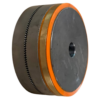
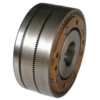
Description
How does an electromagnetic clutch work?
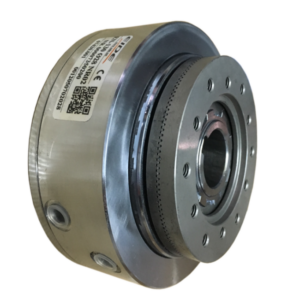
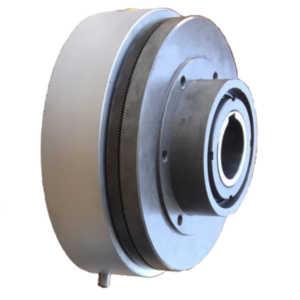
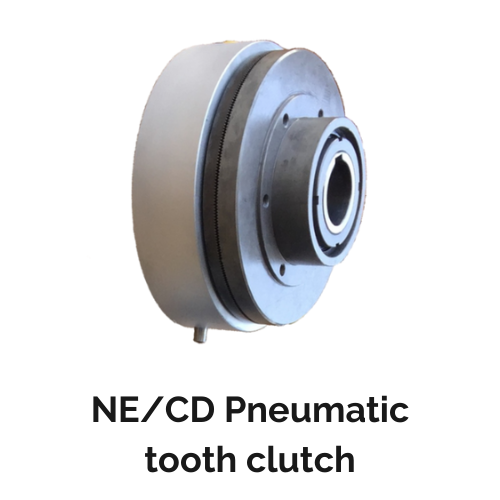
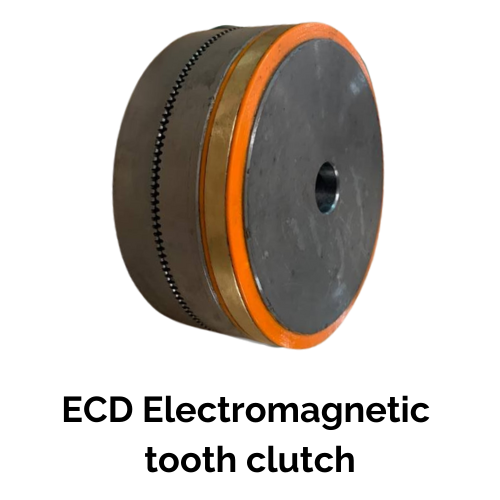
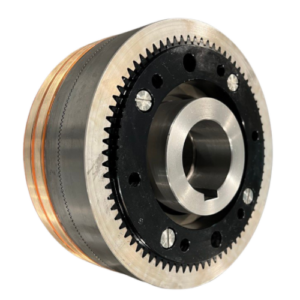
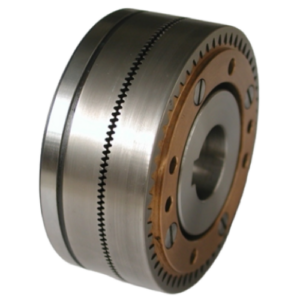
The ECD operates by electromagnetic attraction between the coil body and the toothed armature disc. A 24VDC signal energises the coil, generating a magnetic field that draws the armature teeth into full mesh with the opposing teeth on the rotor. Once engaged, torque is transmitted mechanically through the tooth contact — there is no slip, no wear on friction surfaces, and no reduction in transmitted torque over time.
When the voltage is removed, the armature spring retracts the disc and the clutch disengages. Disengagement is fast and clean, with no residual drag between the shafts.
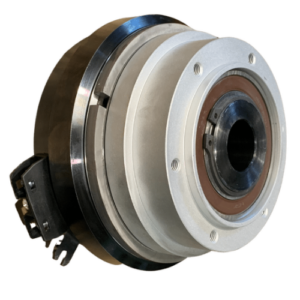
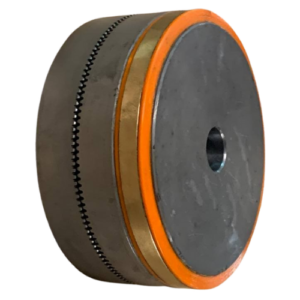
Power is supplied to the coil through slip rings and brush holders integrated into the clutch body, allowing continuous rotation of the input shaft while the coil remains stationary.
ECD electromagnetic clutch: key technical features
-
- Current-operated positive engagement (energise to couple)
- Toothed armature for zero-slip torque transmission
- Instant engagement at standstill or low speed
- 24VDC single power supply via slip rings and brush holders
- High torque capacity in compact dimensions
- No friction lining wear — long service life
- Torque range: 100 to 8,000 Nm (ECD-5 to ECD-500)
- Max. speed (engaged): 1,300 to 4,500 RPM depending on size
- Compatible with most motor and gearbox configurations
Electromagnetic clutch vs friction clutch: when to choose the ECD
The ECD is a tooth clutch, not a friction clutch. The distinction matters for the application:
Tooth clutch (ECD): engages at standstill or low speed only. Once engaged, transmits full torque with zero slip. Suitable for indexing, positioning, and drive engagement where the shafts must be synchronised before coupling. Long service life as there are no friction surfaces to wear.
Friction clutch (electromagnetic): can engage at any speed, with a controlled slip phase during engagement. Suitable for smooth start-up, overload protection, or applications where the speed difference between input and output must be absorbed gradually.
If your application requires engaging two shafts already at speed, or needs controlled slip, contact our technical team to evaluate alternatives within the EIDE and Precima Magnettechnik range.
Need an electromagnetic clutch for a specific drive application?
Send us the shaft diameter, required transmitted torque, operating speed, and duty cycle — our engineering team will confirm the right ECD size or propose an alternative if the application requires a different clutch type.